
Letter Sounds vs. Letter Names: Understanding the Difference
Why does "c" say /k/ in "cat"? Learn the difference between letter names and letter sounds, and why it matters for early reading.
By Best Group Coaching · · 5 min read
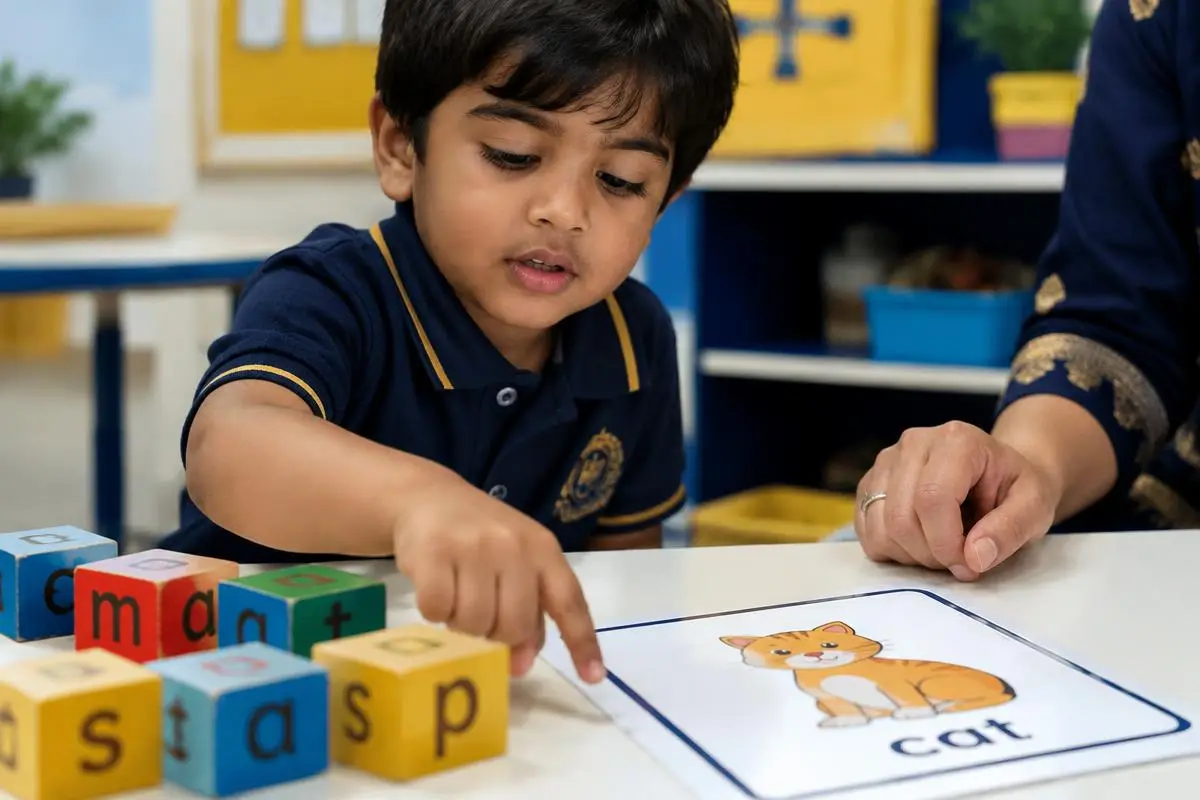
Many parents teach children the alphabet song early on – A, B, C, D… These are letter names. But to read, children need to know letter sounds. Understanding the difference helps parents support reading more effectively.
Letter names vs letter sounds
| Letter | Name | Main sound | |---|---|---| | b | "bee" | /b/ as in bat | | c | "see" | /k/ as in cat | | f | "ef" | /f/ as in fish | | h | "aitch" | /h/ as in hat | | w | "double-u" | /w/ as in web |
If a child tries to read cat using letter names, they would say "see-ay-tee" – which doesn't sound like cat at all. Using sounds – /k/ /a/ /t/ – leads directly to the word.
Why sounds matter for reading
Reading involves blending sounds together. Letter names often include extra sounds that make blending confusing. That is why many phonics programmes focus on sounds first.
Do letter names still matter?
Yes. Children need letter names for:
- spelling words out loud;
- talking about letters ("Capital B");
- alphabetical order and dictionaries later.
Most children learn both. The key is not to confuse them during early reading practice.
Saying sounds correctly
Use short, "pure" sounds:
- Say /m/ (mmm), not "muh".
- Say /s/ (sss), not "suh".
- Say /t/ as a short, crisp sound, not "tuh".
Pure sounds make blending much smoother: /s/ /u/ /n/ blends to sun, whereas "suh-uh-nuh" does not.
Tips for parents
- When your child asks about a letter in a word they are reading, give the sound.
- Use the name when talking about spelling.
- Play sound games – see fun phonics activities for preschoolers.
- Be patient; it is normal for children to mix them up at first.
Learn more
Read phonics for beginners: a parent's guide, or explore our Phonics Course – Offline in Surat and Phonics Course (Online).