
Everyday Activities That Develop Number Skills
Daily routines are full of maths. Discover simple everyday activities – shopping, cooking, travel and play – that build children's number skills naturally.
By Best Group Coaching · · 5 min read
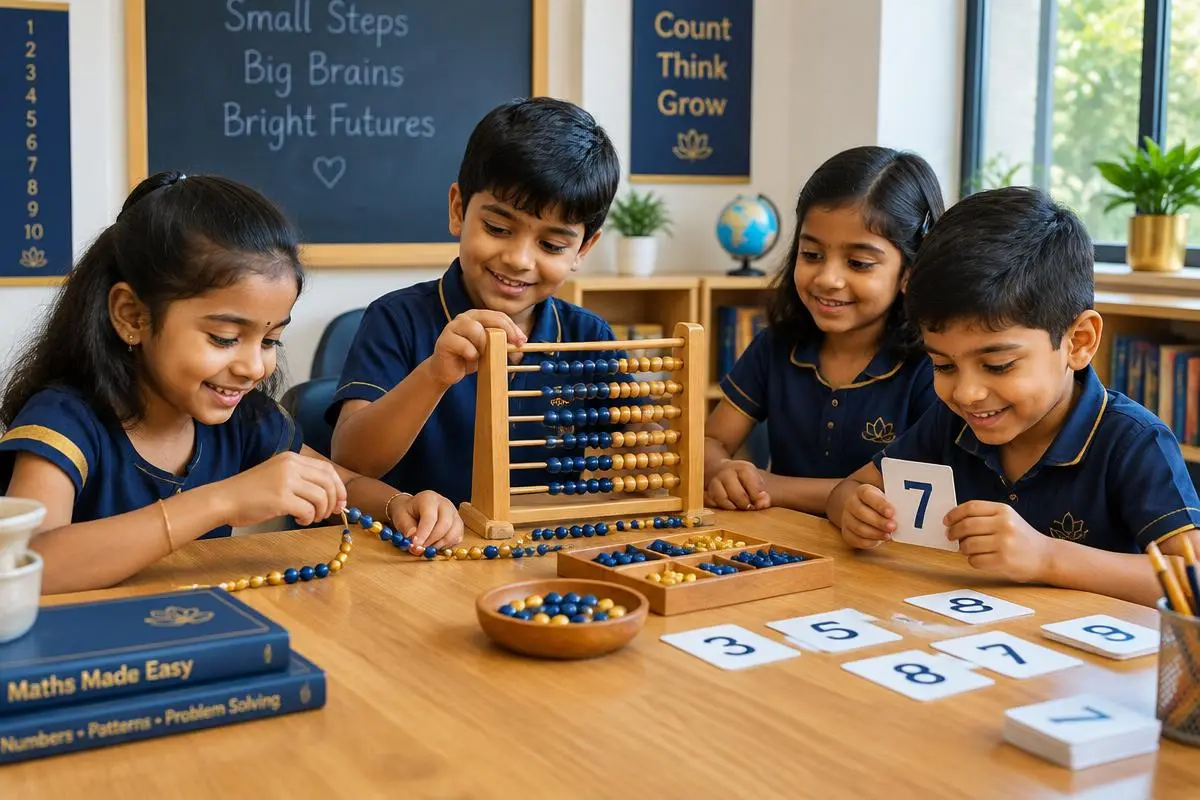
You don't need to set aside special "maths time" to help your child build number skills. Everyday routines are full of chances to count, compare, measure and calculate.
In the kitchen
- Measuring: cups, spoons and grams build measurement skills.
- Halving and sharing: cutting a roti or pizza into equal parts introduces fractions.
- Counting: "Put four tomatoes in the bowl."
While shopping
- Price comparison: "Which packet is cheaper?"
- Adding totals: estimate the total for a few items.
- Change: "If we pay ₹50 for something costing ₹35, how much change do we get?"
On the road
- Number plates: add the digits on number plates.
- Distances and time: "We are 10 km away. How long might it take?"
- Counting: count red cars, buses or bridges.
At home
- Setting the table: one plate per person is one-to-one matching.
- Laundry sorting: sort socks into pairs and count them.
- Calendars: count days until a birthday or festival.
- Clocks: ask your child to tell you when it's 6 o'clock.
During play
- Board games: dice games build counting and addition.
- Building blocks: compare heights, count blocks and create patterns.
- Cricket and sports: keep score and compare runs.
Festivals and celebrations
- Count diyas or decorations.
- Share sweets equally among family members.
- Plan quantities for guests.
Tips for parents
- Talk about numbers naturally – don't turn it into a test.
- Use maths words: more, less, equal, half, double.
- Let your child do the calculating when possible.
- Praise good thinking.
For more structured ideas, see basic maths activities for children at home and easy mental maths tricks for students.
Build maths skills with us
Strengthen foundations with Basic Maths Offline in Althan, Surat or Basic Maths Online.